





Over the years, we have discovered more and more moons of Jupiter. Fortunately for us, researchers have managed to explain how Jupiter got so many of them.
It is well-known that Galileo was the first to discover five of Jupiter’s moons through his telescope in 1610. However, little did he know that the moons he observed were just a fraction of the total number that Jupiter has. Over the centuries, as we have unearthed numerous new moons of Jupiter, it seems only natural to ask the question: how did Jupiter end up with so many moons?

It’s time for some numbers. As of 2018, Jupiter has 79 moons. Of those 79, 57 have names, while the rest only have designations. The discovery of these moons took place over a period spanning four centuries. However, a recent paper not only found 45 additional candidates but also provided evidence for 600 possible moons!
Types of Moons
Before going into their origin stories, we first need to understand the kinds of moons Jupiter has. We generally classify moons (or satellites) into two types: regular and irregular satellites.
Regular satellites are natural satellites usually found close to the planet, within its Hill sphere. The Hill sphere is a region in which the planet’s gravitational influence dominates over that of the Sun. Regular satellites generally have orbits that look more circular than elliptical and have low inclinations.
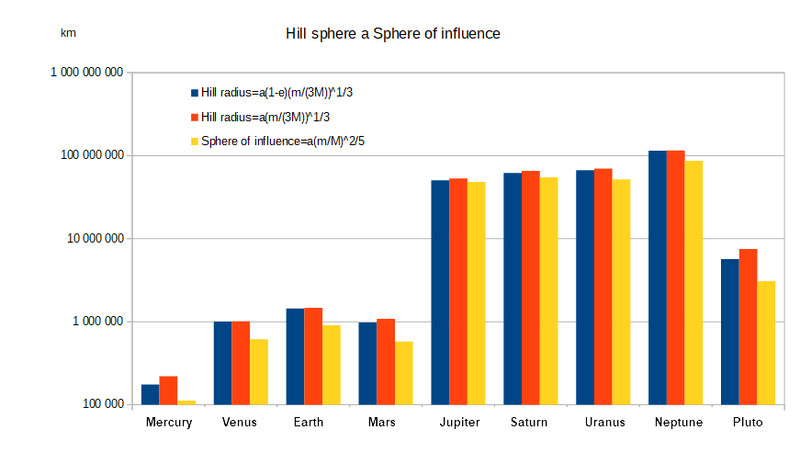
Meanwhile, irregular satellites are much farther away from their parent planet (with distances being about half the radius of the planet’s Hill sphere). They also have higher inclinations than regular satellites and have orbits that are more elliptical than circular.
We also must consider the direction of motion of the moons as they revolve around the planet. Moons move around their parent planet in two ways; prograde and retrograde motion.
In prograde motion (also called a direct motion), the moon revolves in the same direction in which the planet rotates. In the case of retrograde motion, the moon revolves in the direction opposite to that which its parent planet rotates. Most irregular satellites in the solar system have retrograde motion, and nearly all regular satellites have prograde motion.
Jupiter moon groups
Jupiter’s 79 moons are grouped based on several factors. These factors include whether the moon is regular or irregular, the direction of orbital motion, and the group’s origins. These groups are named as follows: Small Inner Regular and Rings, Galileans, Themisto, Himalia, Carpo, Valetudo, Ananke, Carme, and Pasiphae.
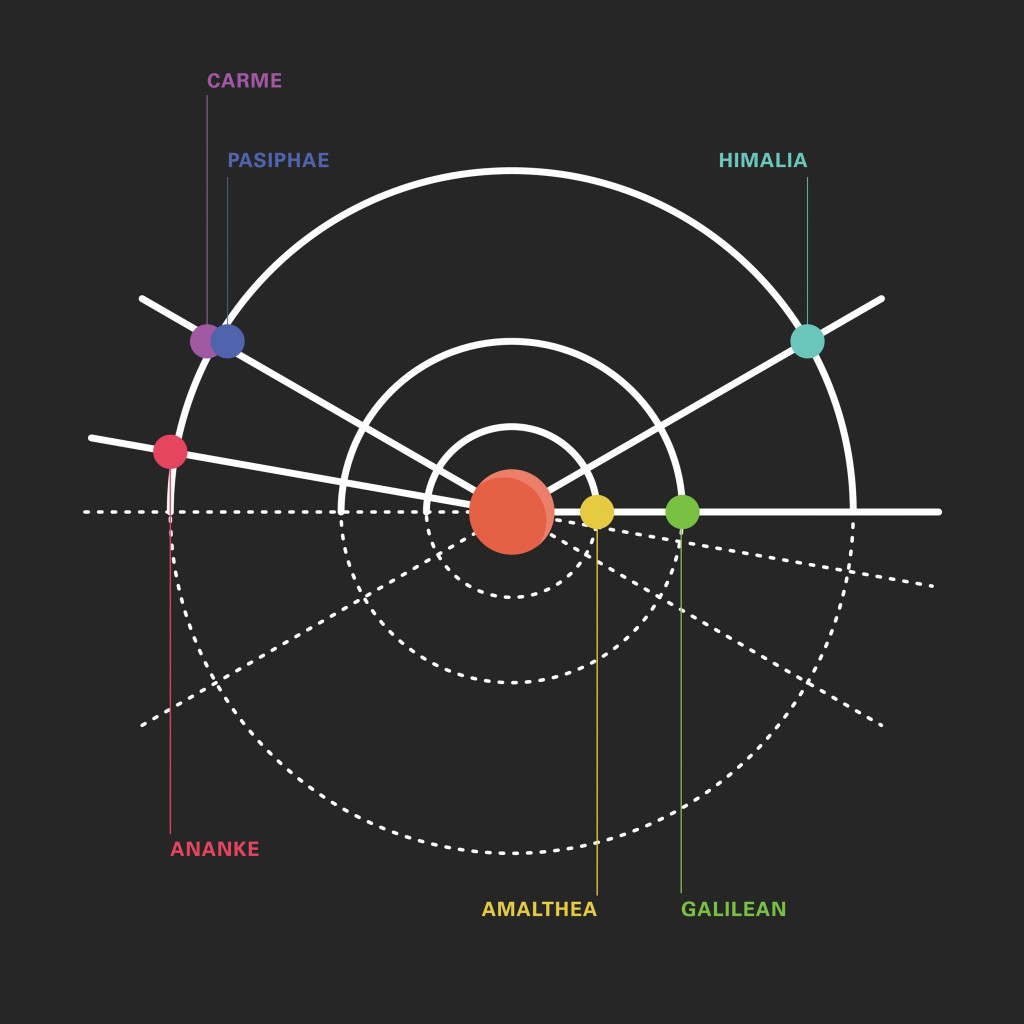
Of these groups, Small Inner Regular and Rings and the Galileans are regular and have prograde orbits. These two groups together constitute eight moons of Jupiter’s 79. The remaining seven groups are all irregular satellites that comprise the remaining 71 moons of Jupiter.
These moons are situated significantly further away from Jupiter than the first two groups of regular moons. Amongst the irregular moon groups, Themisto, Himalia, Carpo, and Valetudo have prograde orbits, and Ananke, Carme, and Pasiphae have retrograde orbits.
The reason Jupiter’s moons show such diverse characteristics is because of how these moons originated. The regular and irregular satellites did not form in the same way. To understand how Jupiter got so many moons, we need to understand the formation of both Jupiter and its moons.
Formation of Regular moons
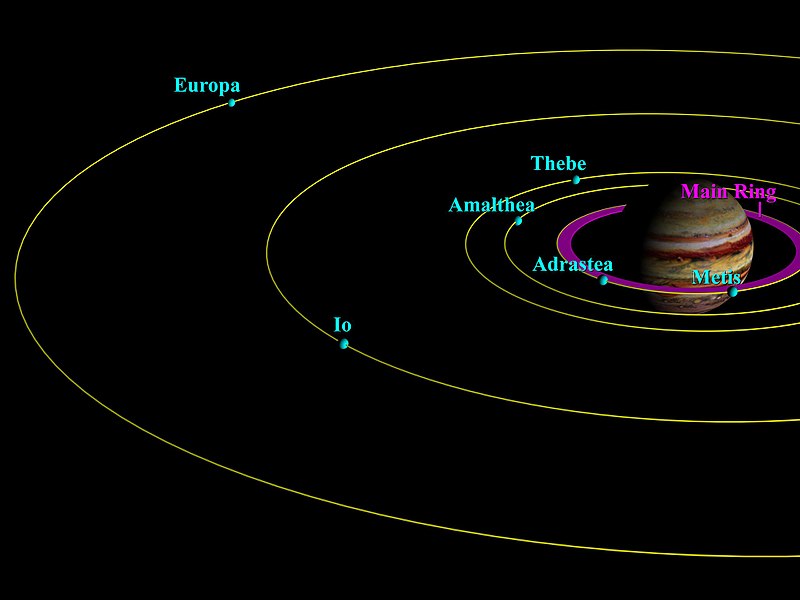
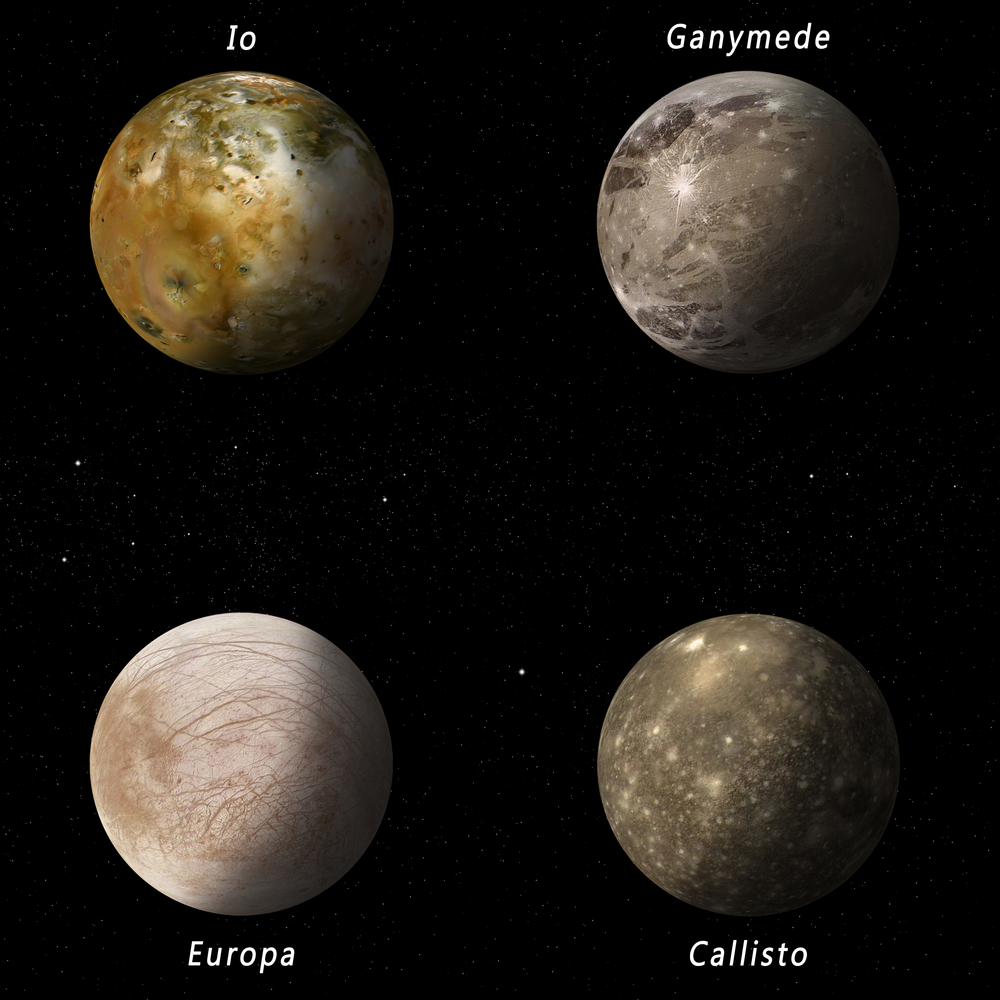
We will first be looking into the formation of Jupiter’s regular moons. We will first focus on the Galilean group, which is significantly larger than the Small Inner Regular group. The Small Inner Regular group, although considered to be Jupiter’s moons, is actually within Jupiter’s faint ring system. The moons of the Small Inner Regular group have irregular shapes. Their orbital properties provide more evidence of the fact that they originate from the disk of dust and gas that surrounded Jupiter when it was a protoplanet, just like the Galilean group.
The formation of the Galilean moons is complicated and directly ties in with Jupiter’s formation. The creation of Jupiter consisted of small objects, dust, and gas accreting into its protoplanet. At some point in this process, a gap or void would have formed, resulting in the Jupiter protoplanet being surrounded by its own disk of gas and dust.
This disk is called the circum-jovial disk (CJD). It is within the disk that surrounded the Sun during its formation (called the circumstellar disk). The Galilean moons formed from this circum-jovial disk.
A 2002 study showed that a circum-jovial disk that is ‘gas-rich’ would present multiple issues for the formation and survival of Galilean satellites. Instead, a circum-jovial disk having a low gas density would be more favorable for the genesis of Galilean moons. A further study done in 2009 suggested that Jupiter might have captured several generations of Galilean moons. The current generation remained after the CJD thinned out enough to prevent the moons from falling into Jupiter.
A more recent 2019 study concerning the Galilean moons assumes that the Galilean moons formed very slowly over time, in the form of ‘pebbles’ that became the seeds for moon formation. They also presume that the gas flowing into the CJD from the circumstellar disk reduced exponentially. The study could explain several properties of the Galilean moons, like their internal structures and the nature of their orbits, which previous studies could not consistently do.
Formation of Irregular moons
Meanwhile, the irregular moons would not have formed along with Jupiter. They are presumed to have initially been small objects (asteroids or comets) left over after the Sun’s formation that got close to Jupiter at some point. Scientists have theorized three methods by which their capture is possible.
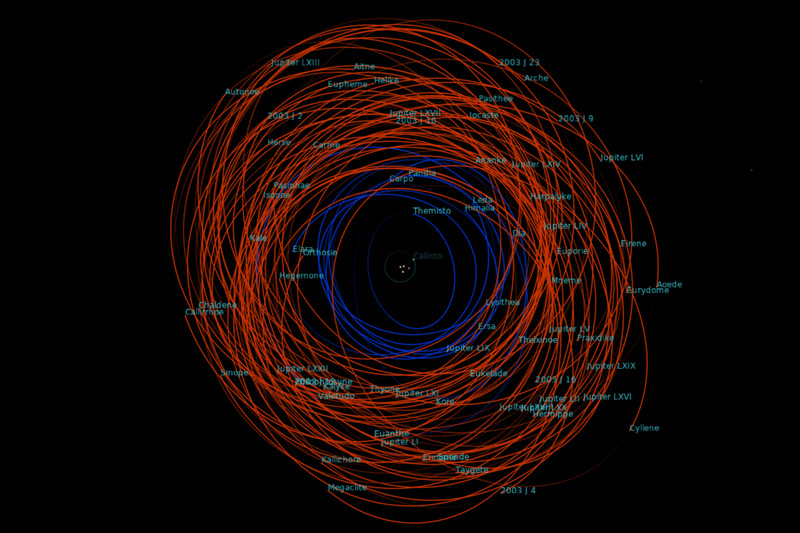
The first manner is by a process called pull-down capture. At one point during Jupiter’s formation, the protoplanet would have reached a certain mass that would cause a rapid accretion of the gas into it from the circum-jovial disk. This would cause its mass to increase suddenly, thereby capturing nearby objects into permanent orbits. Irregulars captured in this way generally have retrograde orbits. However, a complex mechanism can sometimes result in an irregular moon with a prograde orbit.
The second mechanism is called a gas-drag capture. This mechanism is also the result of a runaway gas accretion into the protoplanet. The gas layers that had initially surrounded Jupiter during its birth would shrink as it cools. When small, random solid objects pass through these gaseous layers, they will slow down via friction and might get bound with Jupiter.
The final way in which Jupiter obtained its irregular moons is by a process called N-body interaction. Here, the irregular satellites are thought to be captured by gravitational interactions with the giant planets and collisions with smaller objects. This process is used to explain how Uranus and Neptune got their irregular moons.
A study in 2007 showed that the outer planets could have obtained their irregular moons in another way. At a time when the orbits of Uranus and Neptune were unstable, there might have been periods when they had moved closer to Jupiter and Saturn.
During each such encounter, there would have been interactions between the outer planets and several other small planetesimals (small objects that are remnants of star formation). These interactions might have resulted in a few planetesimals getting bound with Jupiter. Over time, they would have been permanently settled as irregular satellites.
A 2014 simulation of the above model showed that it could explain the number and orbits of the observed irregular satellites of Jupiter.
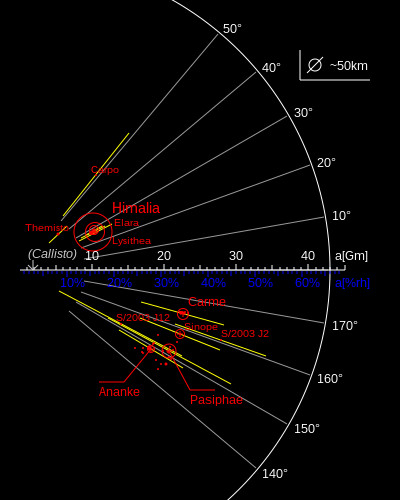
So why are irregulars clumped into all these groups like Himalia and Carme? Firstly, the irregular moons within each group have similar orbital properties and are expected to have originated from the same parent body. Each group is dominated gravitationally by the moon that bears the group’s name. That moon is also the largest and the first moon discovered within that group.
Conclusion
We can see that Jupiter acquired its moons in a few different ways. Either they were created from the dust and other small objects that had surrounded Jupiter during its formation, or they were captured by Jupiter’s enormous gravity. So to answer the question posed at the top of this article: how did Jupiter get so many moons? Well, the answer is… “because of how Jupiter is!’
Discovering more about the outer planet satellites’ origin and properties is key to understanding more about the history of our solar system. The formation of satellites, especially the irregular ones, is indicative of the dynamics of small objects like asteroids, comets, and the gas and dust surrounding the Sun during the formative period of the solar system.
More studies also give us a better idea about the formation of the gas and ice giants and will help us better understand the internal structure and properties of these incredible celestial bodies. (Science ABC)
Find out more by engaging Buzzer.lk and Buzzer Science & Technology.
