



Close Menu
BuzzerBuzzer
  • Home
  • News
    • World News
    • Politics
    • Financial
    • Entertainment
  • Sports
  • Lifestyle
    • Fitness
    • Food
      • Food Recipes
    • Fashion
    • Travel
    • Hotels
  • Other
    • Medical
    • Science & Tech
    • History
  • Blog
    • Hotel Reviews
    • Product Reviews
    • Restaurant Reviews
    • Services Review
  • Video

Subscribe to Updates

Get the latest news from Buzzer.

What's Hot

Pillayan further remanded over 2008 Batticaloa murders

July 24, 2026

Sri Lanka produces only 43% of daily milk requirement locally: Dy Minister

July 24, 2026

Sheikh Hasina ally to step down as Bangladesh’s president

July 24, 2026
Facebook X (Twitter) Instagram Pinterest YouTube Tumblr LinkedIn TikTok
Trending
  • Pillayan further remanded over 2008 Batticaloa murders
  • Sri Lanka produces only 43% of daily milk requirement locally: Dy Minister
  • Sheikh Hasina ally to step down as Bangladesh’s president
  • Debate on no-confidence motion against Justice Minister begins in Parliament
  • President calls for sports culture to build a healthy and disciplined generation
  • Labour Dept. services to be unavailable on July 30 and 31
  • Arrest warrant issued for MP Ramanathan Archchuna
  • Dengue death toll rises to 59 in Sri Lanka this year
Facebook X (Twitter) Instagram YouTube Pinterest Tumblr LinkedIn TikTok
Friday, July 24
BuzzerBuzzer
  • Home
  • News
    • World News
    • Politics
    • Financial
    • Entertainment
  • Sports
  • Lifestyle
    • Fitness
    • Food
      • Food Recipes
    • Fashion
    • Travel
    • Hotels
  • Other
    • Medical
    • Science & Tech
    • History
  • Blog
    • Hotel Reviews
    • Product Reviews
    • Restaurant Reviews
    • Services Review
  • Video
SINHALA
Facebook X (Twitter) Instagram YouTube Pinterest Tumblr LinkedIn TikTok
BuzzerBuzzer
SINHALA
Home » Do all plastics harm the environment equally?
Blog 27 Views

Do all plastics harm the environment equally?

Buzzer EditorBy Buzzer EditorFebruary 9, 2023Updated:February 9, 2023No Comments6 Mins Read27 Views
Share
Facebook Twitter LinkedIn Pinterest Email Telegram WhatsApp
Sponsored

Plastics vary in their degree of environmental impact. Compared to gooey thermoplastics, thermoset plastic is stronger and more durable, which makes them more difficult to recycle. A Resin Identification Code (RIC) that rates which plastics may be recycled and how is also available. Last but not least, certain plastics include substances like chlorines that can be harmful to the environment.

By only one day, Belgian chemist Leo Baekeland beat Scottish scientist James Swinburne to a patent office in 1907. A substance known as Bakelite was patented there by Baekeland. The first totally synthetic plastic in history was called “Bakelite”. It was a respectable forerunner of the kinds of plastic we use today. Plastic is as ubiquitous as sunshine, appearing in everything from food packaging and infant bottles to electronic chip carriers. The plastics market has never been bigger than it is right now. Synthetic polymers and everyday plastics nearly carried the whole logistical weight of the medical profession during the Covid-19 epidemic. Every day, millions of plastic masks and gloves were worn.
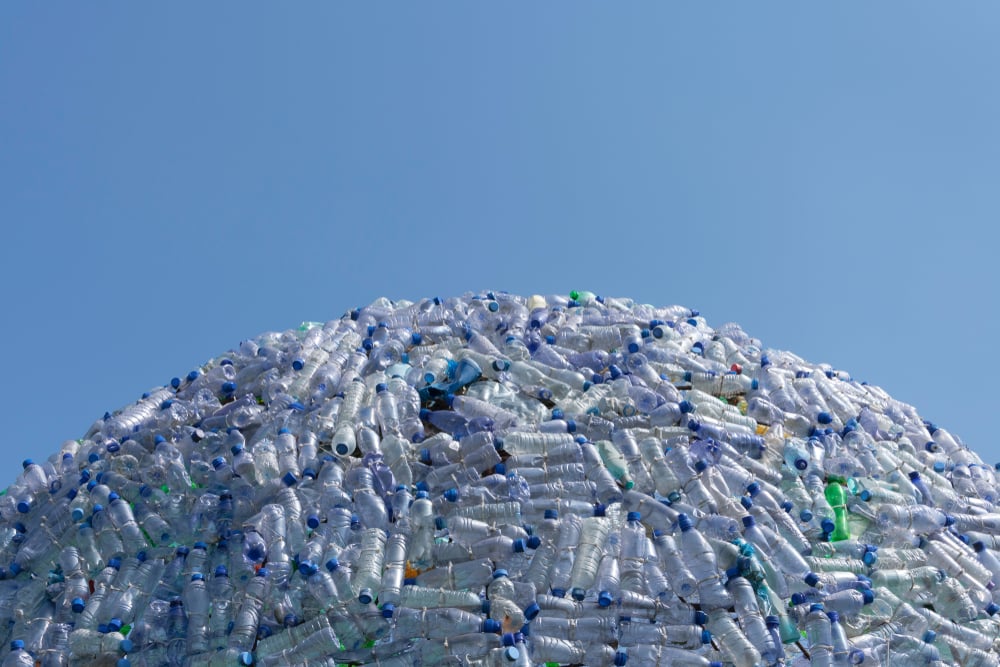
It’s reasonable to assume that each of us leaves behind a mountain of plastic water bottles throughout our lives. (Photo Credit: Farantsa/Shutterstock)

Of course, there are many other reasons why plastic is bad for the environment, but with so much of it available, what the heck do we do with it all after we’re done with it?

What Is Plastic?

We must grasp what plastic is chemical to comprehend what happens to it when it is discarded.

Simply said, plastic is a polymer made of tiny chemical building pieces called monomers that are joined together to form a much larger molecule known as a polymer. Covalent linkages between the monomers are created. Covalent bonds between monomers create chains, which collectively make up a polymer.

A monomer can be seen more easily as a block. Building a house requires the consecutive laying of many bricks. The home is made of plastic. But not every plastic is made of the same kind of polymer. Thermoset plastics and thermoplastics are the two forms of plastics. Their chemical and physical characteristics account for the disparity.
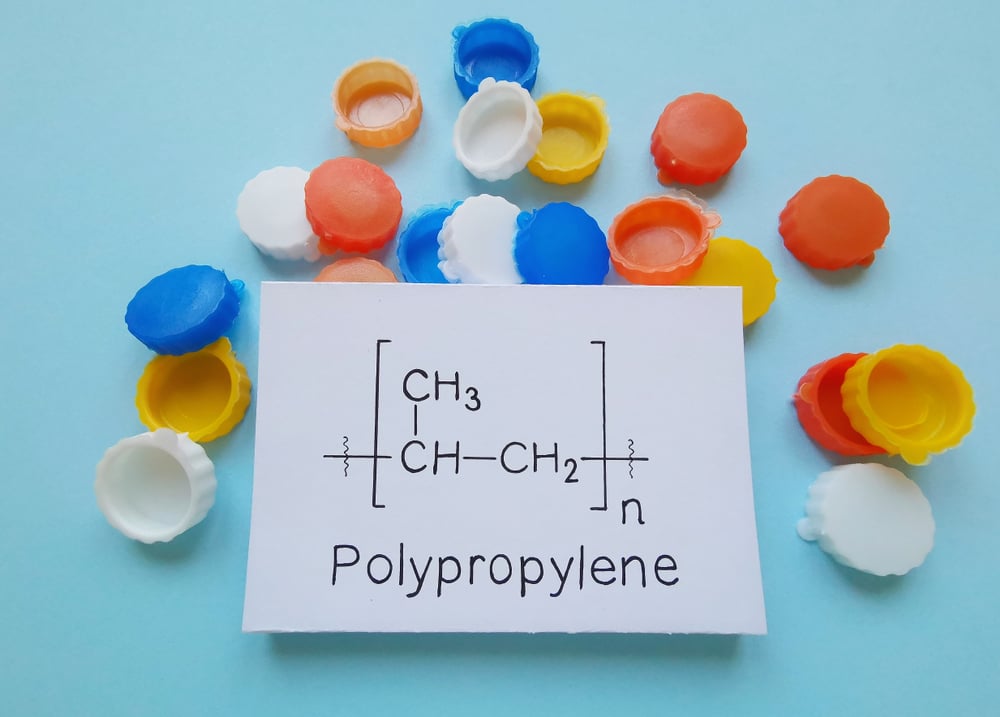
Polypropylene is a plastic composed of numerous monomer units of Propene. (Photo Credit : Danijela Maksimovic/Shutterstock)

Procedures known as liquid moulding processes are used to make thermoset polymers. When polymers and other ingredients are heated to a liquid state, a thermoset plastic is formed while the mixture cools in the mould. Cross-linkage, a chemical reaction, is promoted by this mechanism. The cross-linking of the mixture’s polymers keeps them from melting under the influence of heat. As a result, thermosets like polyester, polyimides, and polyurethane are ideal for hot conditions. The cross-links in thermoset polymers are another factor contributing to their non-recyclability. Thermoplastics, on the other hand, melt when exposed to high heat following the curing process because they are sensitive to the effects of heat. This makes recycling them a little bit simpler. Polyethene is a good example of a thermoplastic.

After we use all the plastic, what happens to it?
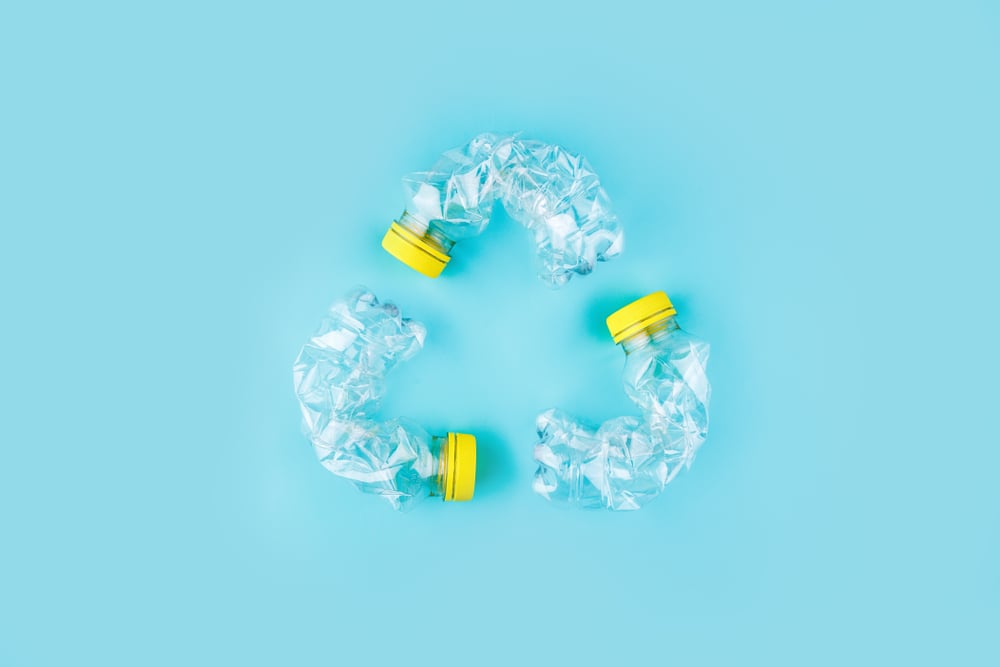
A recycling symbol made using bottles of plastic, which ironically rarely get recycled. (Photo Credit: Mykolastock/Shutterstock)

It’s a little more difficult than that, in actuality. Plastic has the drawback that it cannot be changed into another substance. Although technically conceivable, recycling plastics into gasoline or oil releases hazardous contaminants, creating a lose-lose situation.

The majority of plastics cannot biodegrade. They disintegrate into smaller fragments but not into simpler compounds (i.e., organic or biological materials). Microplastics are very little bits of plastic.

Recycling plastics is the best option to stop them from breaking down into microplastics. However, when we try to scale up plastic recycling, a lot of strange issues arise.
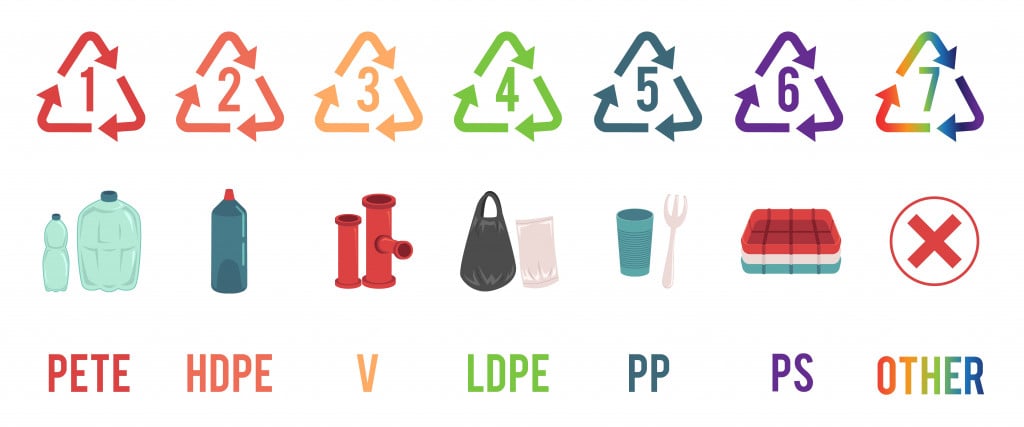
A RIC chart shows the seven different types of plastics. (Photo Credit: Sabelskaya/Shutterstock)

A Resin Identification Code is given to each plastic and item manufactured of plastic (RIC). This code enables us to determine the kind of plastic that was used to create an item. Each plastic object may be classified into one of seven classes based on this code. Items falling within RIC Classes 1 (made of PETE/PET) and 2 (made of HDPE) can be recycled. Classes 3 through 7 of RIC may be recycled (depending on where you live).

The headache continues after that. Recycling plastic is more difficult in certain situations, such as with two-layered products (like your coffee cup). Paper that has been fused with plastic cannot be recycled. It is necessary to separate the two elements before processing them.

Additionally, certain plastic products can only be recycled a maximum of two or three times due to the fact that each recycling shortens the monomeric chains that makeup plastic. The final plastic’s strength and quality are directly impacted by this.

Strangely enough, to compensate for the quality loss experienced during recycling, the majority of recovered plastic is reinforced with new or “virgin” plastic. This obviously contradicts the goal of recycling, which is to use less of it. It is reasonable to ask whether this qualifies as recycling at all.

So, Are all forms of plastic thus harmful to the environment?

Not really.

The most often recycled plastics are those from RIC Classes 1 and 2. They also have a lower likelihood of helping to produce microplastics. They are frequently used to create straightforward, single-layered goods like water bottles (100% PET).

They are as innocent as plastics can be in terms of harm done. Classes 3-6 are a little more difficult to evaluate since, although the necessary technologies for recycling them exist, they may not always be recyclable depending on where you reside.

Additionally, other complicated procedures (pyrolysis, hydrolysis, heating, etc.) are necessary for some plastics, such as PVCs or polystyrene, to be efficiently recycled.

We also need to be aware of Class 7 plastics, which is doubtful. All polymers that are classified as Class 7 plastics must adhere to the same fundamental standard: they cannot be used elsewhere. The object in question is simply thrown into class 7 if it doesn’t fit within any of the first six classes. Literally, it is a dump for unidentified plastics. As a result, it is challenging to recycle all Class 7 plastic products because little is known about their makeup.

Conclusion

Ultimately, some plastics—such as polyvinyl chlorides and polystyrenes—are riskier than others. Many of the procedures used to recycle PVCs make an effort to get rid of the additives and dangerously excessive quantities of chlorine. In actuality, PVC is a known carcinogen according to the WHO.
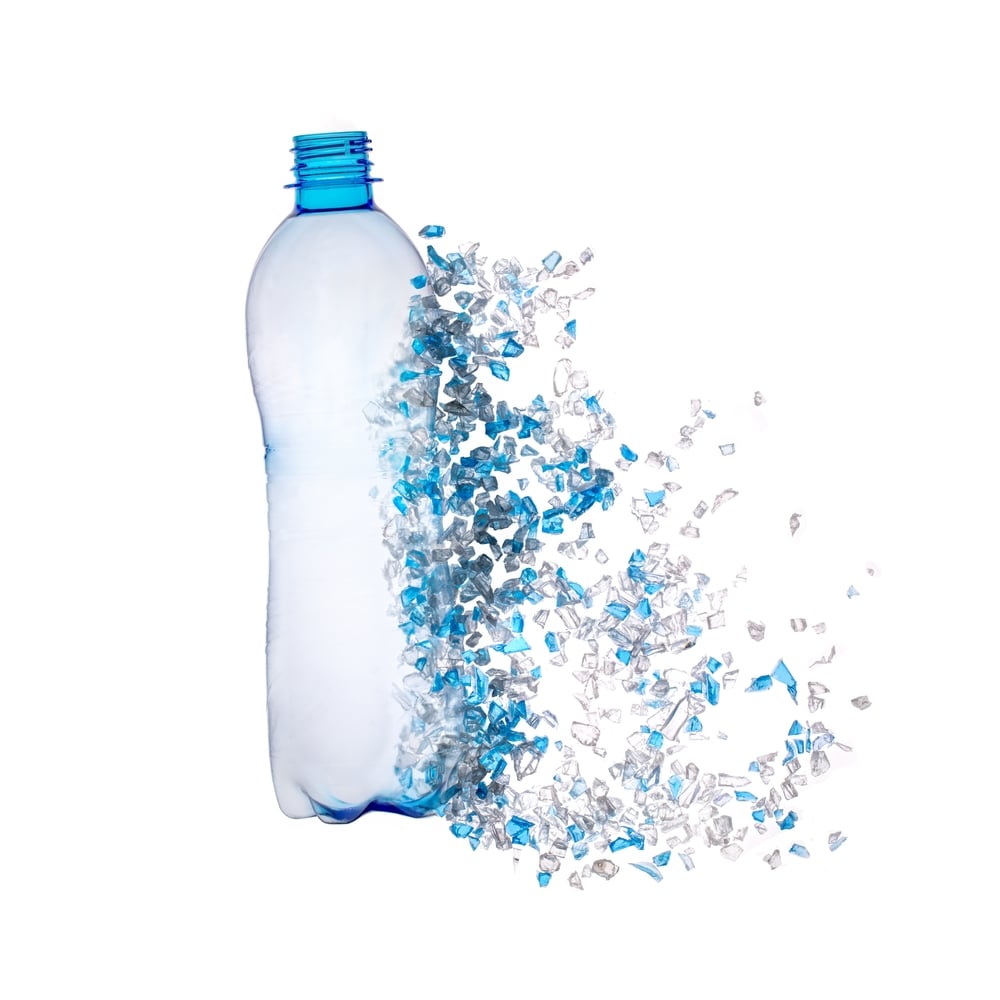
Every piece of plastic inevitably breaks down into microplastics at some point in time. (Photo Credit: Vitte Yevhen/Shutterstock)

The alarmingly low percentage of plastic that is ever recycled is the true issue. Only 9% of plastic is really recycled on a global scale.

If so, don’t forget to post your thoughts in the comment section while sharing this article.

Stay connected with Buzzer.lk and Buzzer Blog to know more such interesting information.

Advertisement
blog featured pick picks science & tech
Share. Facebook Twitter Pinterest LinkedIn WhatsApp Email
Previous Article120 aftershocks in Turkey and Syria
Next Article The verdict on the increase in electricity bills after 15th
Buzzer Editor

Related Posts

1 Views

Pillayan further remanded over 2008 Batticaloa murders

July 24, 2026 News 1 Views
2 Views

Sri Lanka produces only 43% of daily milk requirement locally: Dy Minister

July 24, 2026 Financial 2 Views
4 Views

Sheikh Hasina ally to step down as Bangladesh’s president

July 24, 2026 World News 4 Views

Comments are closed.

Sponsored Ads
Advertisement
Our Picks

Pillayan further remanded over 2008 Batticaloa murders

July 24, 2026

Sri Lanka produces only 43% of daily milk requirement locally: Dy Minister

July 24, 2026

Sheikh Hasina ally to step down as Bangladesh’s president

July 24, 2026

Debate on no-confidence motion against Justice Minister begins in Parliament

July 24, 2026
BuzzerLK
  • High-level IMF team to visit Sri Lanka this week!
For more info click - https://buzzer.lk/high-level-imf-team-to-visit-sri-lanka-this-week/

#lka #presidentialelection #updates #srilanka
  • Fuel prices reduced!
For more info click - https://buzzer.lk/fuel-prices-reduced-2/

#lka #presidentialelection #updates #srilanka
  • World Children’s Day 2024!
For more info click - https://buzzer.lk/world-childrens-day-2024/

#lka #presidentialelection #updates #srilanka
  • Israeli strikes may have displaced million people

For more info click - https://buzzer.lk/israeli-strikes-may-have-displaced-million-people/

#lka #presidentialelection #updates #srilanka
  • President orders to open 2 closed roads!
For more info click - https://buzzer.lk/president-orders-to-open-2-closed-roads/

#lka #presidentialelection #updates #srilanka
  • Stop inviting politicians to school events: Harini!

For more info click - https://buzzer.lk/stop-inviting-politicians-to-school-events-harini/

#lka #presidentialelection #updates #srilanka

Follow Us

Stay In Touch
  • Facebook
  • Twitter
  • Instagram
  • YouTube
  • Pinterest
  • LinkedIn
  • TikTok
Don't Miss
News
News July 24, 20261 Views2 Mins Read

Pillayan further remanded over 2008 Batticaloa murders

By Buzzer EditorialJuly 24, 20260 News 2 Mins Read1 Views

The Batticaloa Court today (24) ordered that former State Minister Sivanesathurai Chandrakanthan, widely known as…

Sri Lanka produces only 43% of daily milk requirement locally: Dy Minister

July 24, 2026

Sheikh Hasina ally to step down as Bangladesh’s president

July 24, 2026

Debate on no-confidence motion against Justice Minister begins in Parliament

July 24, 2026

Subscribe to Updates

Get the latest news from Buzzer.

About Us
About Us

Buzzer platform provides a wide range of contents starting from lifestyle to politics. All lingering questions and undisclosed truths will be addressed as will taboo topics to which Sri Lankans struggle to find answers. Buzzer's primary goal is to educate the general public on current events and to provide solid information on topics that have been concealed. The articles, videos, and live event coverage in the form of writing make up the majority of the content.

[email protected]
+94 112 141 427

Follow Us
  • Facebook
  • Twitter
  • Instagram
  • YouTube
  • Pinterest
  • LinkedIn
  • TikTok
Recent Posts
  • Pillayan further remanded over 2008 Batticaloa murders
  • Sri Lanka produces only 43% of daily milk requirement locally: Dy Minister
  • Sheikh Hasina ally to step down as Bangladesh’s president
  • Debate on no-confidence motion against Justice Minister begins in Parliament
  • President calls for sports culture to build a healthy and disciplined generation
  • Labour Dept. services to be unavailable on July 30 and 31
  • Arrest warrant issued for MP Ramanathan Archchuna
  • Dengue death toll rises to 59 in Sri Lanka this year
© 2026 Buzzer Media Inc. Digitally Crafted by Rabbit.
  • Home
  • Terms and Conditions
  • Privacy Policy
  • Get In Touch

Type above and press Enter to search. Press Esc to cancel.