




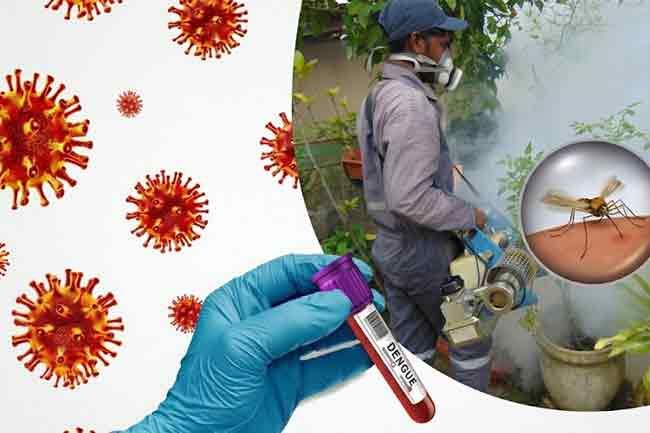
The mosquito larval density in the Western Province has increased significantly, making the next two weeks a critical period in terms of dengue transmission, a member of the Expert Committee on Dengue Management, Specialist Dr. Ananda Wijewickrama, has warned.
Speaking during the Derana BIG FOCUS programme, Dr. Wijewickrama said the current dengue outbreak could become more severe than the situation experienced in 2017, based on the rapid spread of the disease.
He further noted that hospitals in the Western Province have exceeded their capacity due to the sharp increase in dengue patients, with some hospitals forced to accommodate two or three patients on a single bed.
Meanwhile, Professor Neelika Malavige of the University of Sri Jayewardenepura said dengue cases typically increase during the southwest monsoon period from May to July and during the northeast monsoon period from November to January.
She noted that early signs of the current situation had been observed during December and January, adding that the unusually high temperatures experienced in February, March and April following Cyclone Ditwah had temporarily slowed mosquito breeding.
Professor Malavige also stated that three dengue vaccines have been approved in several countries, including Indonesia, the Philippines, Thailand, Vietnam and Malaysia. However, she stressed that several factors must be considered before introducing such a vaccine in Sri Lanka.
She explained that the vaccine, which requires two doses, would not be an immediate solution to control an epidemic situation, as it takes time for immunity to develop. However, she added that the vaccine has shown effectiveness in individuals who have already contracted dengue.
According to the latest figures, Sri Lanka has recorded a total of 66,064 dengue cases so far this year, with the death toll rising to 46.
A total of 10,685 dengue cases have been reported within the first nine days of July alone, with 1,030 new cases identified yesterday.
The Western Province accounts for 52.7% of all reported dengue cases in the country. Meanwhile, Gampaha District has now surpassed Colombo District, which previously recorded the highest number of cases, and has emerged as the district with the highest dengue burden.
Amid the prevailing high-risk situation, special dengue control operations continued across several areas of the country today with the participation of tri-forces personnel.
